In elite sport, you can always spot the people looking for a shortcut. There isn't one. You can't cram for an Olympic final, and you can't sprint your way through a multi-year cryptographic transformation either.
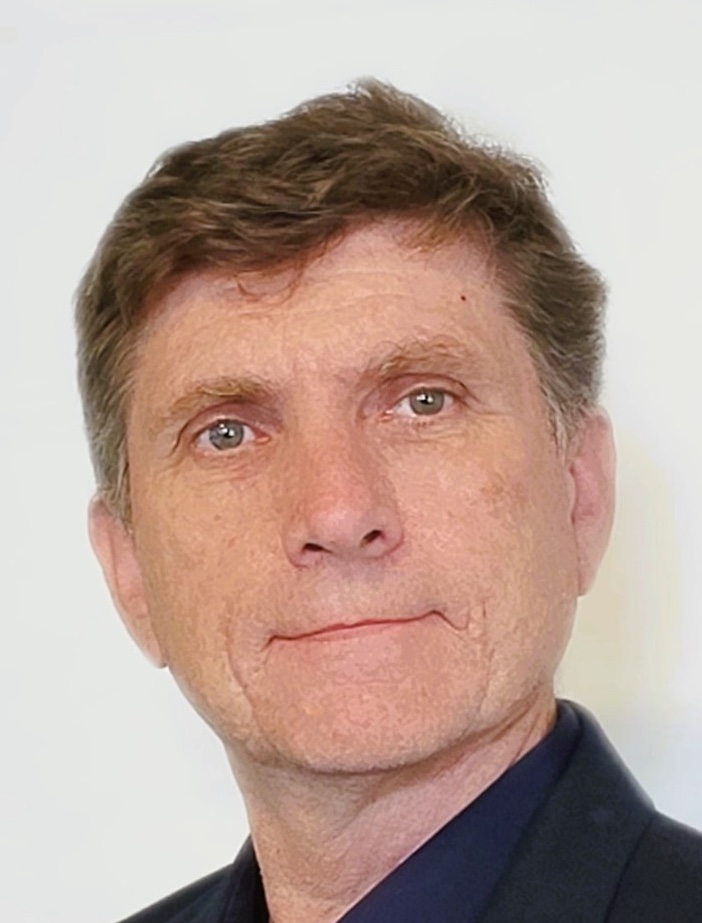
I'm not a cryptographer, and I don't have a PhD. What I do have is an Olympic gold medal, an MBA, a few decades in software and cybersecurity, and a front-row seat to how organizations handle hard, systemic change. ProteQC is where those threads come together.
Before quantum, my world was Agile.
At Rally Software, watching legends like Jean Tabaka and Ryan Martens, I saw what a truly Agile environment could feel like: work flowing faster, less waste, and, most importantly, work that actually mattered instead of feature sets nobody used. People lit back up. They remembered why they got into software in the first place, before requirements documents got bloated and stopped sounding like real customers at all.
Post-quantum cryptography (PQC) feels eerily similar.
The Righteousness Problem
In both Agile and PQC, there are purists.
In Agile, it sounded like: "If you're not doing framework X exactly like the book, you're not really Agile." In PQC, it's a new chorus: just adopt this algorithm, just buy this discovery tool, just follow this reference architecture, then you're "really" quantum-safe.
Right now, the space is full of strong opinions. Some are grounded in decades of research. Some are grounded in fear. Some are grounded in the very human observation that this decade will be disruptive and there is money to be made.
You see vendors promising one scanner that will "tell you everything that's vulnerable," commentators declaring that if you're not already migrated you're already behind, and people implying that if you don't understand the math you shouldn't be in the room.
There are brilliant PhDs who've carried this field for years and are finally seeing it commercialize. There are well-meaning sellers repeating what they've been told without understanding the nuance. And there are a lot of executives quietly thinking, "I hear the noise, but I still don't know what I'm supposed to actually do with my environment."
As someone who has lived through more than one transformation wave, I'm wary of certainty this early.
What We Actually Know
Here's what we're pretty sure of:
It's highly probable that quantum computing will break today's widely deployed public key cryptography over the coming years, putting at risk the digital certificates and key exchanges that underpin banking, payments, and identity. Long-lived financial data is vulnerable to "harvest now, decrypt later" attacks, where adversaries can capture encrypted traffic today to decrypt once they have the capability. Regulators in the UK, EU and US are already moving, and NIST and others have now named concrete PQC algorithms and deprecation timelines for old ones.
We also know there isn't a single algorithm, tool, or vendor that will "fix" this for you.
That's why, at ProteQC, we talk about cryptographic resilience rather than just the quantum threat: the ability of your organization to see its cryptography, govern it, and change it as threats and standards evolve.
If you grew up in software, this terrain is familiar. "If you can dream it, you can build it" has always cut both ways. Quantum just makes the upside and downside bigger.
Agile, Olympics, and PQC: The Same Pattern
When I look at PQC through Agile and Olympic lenses, three parallels jump out.
First, it's enterprise-wide. You're not just changing a library. Cryptography is woven through identity, payments, customer channels, APIs, mainframes, cloud workloads, archives, vendors and partners. Any meaningful change touches risk, compliance, architecture, engineering, procurement, and legal. That's a transformation, not a feature request.
Second, it depends on people and governance, not just tools.
Successful Agile transformations didn't start with a tool rollout. They started with a clear "why," leadership alignment, and changes to how teams planned, prioritized, and shipped. PQC is the same. Buying a cryptographic discovery tool before you have policy, ownership, and a view of what "good" looks like is like buying a fancy stopwatch before you've written a training plan.
That's why at ProteQC we start with governance, policy, and people — not scanning tools. We call this Pre-Discovery™: the work you do before you scan anything, so that when you do turn tools on, they're answering questions that actually matter to your business.
Third, it's a long game.
Olympic campaigns are built in years of cycles: plan, train, test, adjust. You build systems and habits that hold under pressure. Cryptographic transformation is the same. Regulators and standards bodies are pointing to a 2025—2035 horizon for PQC transition. This is not a three-week project; it's a decade of sequencing, learning, and iteration.
So when I hear, "We'll just wait until the tools mature and then migrate," I hear the athlete who wants to start serious training six months out. You might still show up to the race, but you miss the hard miles that actually make you resilient enough to finish it.
From Tools to Transformation
If you're a CRO, CISO, CIO or CEO, a sane PQC journey doesn't start with a shopping list; it starts with your people and posture. Who actually owns cryptography in your organization? How does it tie into your risk appetite, your regulatory obligations, your customer promises? Getting clear on those basics — and educating your leadership so they understand "harvest now, decrypt later" and the regulatory timelines — is the heart of Pre-Discovery™. It's the work of agreeing why this matters to you before you unleash any tools on your environment.
Only then does discovery make sense. At that point, you're not scanning for the sake of a heatmap; you're using cryptographic inventories and risk evaluations to answer specific questions: Where are our longest-lived secrets? Which systems fall under the tightest regulations? Which vendors sit in the most critical paths? Discovery becomes a way to prioritize and to inform design and change, not a science project.
And because this isn't a one-and-done exercise, you have to think in terms of continuous assurance. That means accepting that your cryptographic posture will change many times between now and 2035 — as standards shift, implementations mature, and your own business evolves — and building lightweight ways to check, prove, and adjust as you go. Tools matter in this story. They just aren't the story.
Why I'm Here, and Why ProteQC Exists
When I retired from swimming, I learned something important about dreams: the moment you touch the wall and see the world record next to your name, the dream is real and over at the same time. Twenty-five years ago, that chapter closed. Since then, I've chased different kinds of dreams in tech.
The pattern I look for now is simple: Does this matter? Does this help people do work that means something again?
PQC checks both boxes.
Companies are being forced, by physics and regulation, into a period of deep structural change. The cryptographic assumptions they've relied on for decades are expiring. That's painful. It's also an opportunity to clean up, modernize, and make security more honest, transparent, and human in the process.
ProteQC exists for the teams in the middle of that.
We're vendor-neutral, services-first, and focused on mid-market financial institutions because that's where the risk is real, the budgets are finite, and the "just call a global consultancy" play often doesn't fit. Our job is not to sell you a box. It's to help you build the cryptographic equivalent of a high-performance program: clear goals, a long-term plan, disciplined execution, and the confidence that when the next algorithm is deprecated, you're ready.
I don't have all the answers. No one does. What I do have is a track record of helping organizations navigate messy transformations, a team of deep cryptography and compliance experts, and an Olympic-sized bias toward doing the hard work instead of looking for shortcuts.
If Agile taught us anything, it's that you don't need perfect information to start. You need a clear why, a small first step, and partners you trust.
Quantum will be no different.